
Share
If you've ever cleaned out an attic and found a flat box with a metal or plastic reel inside, tape wound around it like movie film, you were holding the oldest recording format in the house.
Reel-to-reel. Open reel, if you like. From the 1950s into the 1980s, this was how families recorded sound: birthdays, church services, school concerts, radio shows taped off the air. And one use that stops people cold when they discover it: voice letters. Families and soldiers recorded messages on reels and mailed them instead of writing. For some families, a reel like that is the only recording of a voice that exists anywhere.
The tape itself usually survived. The problem is playing it. Nobody sells a new reel-to-reel deck at a store, so the whole rescue comes down to finding a vintage machine that still works.
The Deck Hunt (Buy Local, Buy Proven)
The open-reel community's advice is consistent. First: buy local when you can. These decks are seriously heavy, shipping runs $75-150, and a machine that worked before shipment can arrive broken. Facebook Marketplace and Craigslist let you test before paying. Estate sales turn up steals; collectors still talk about $40 finds. Audio repair shops sometimes sell fully serviced decks, which cost more and remove most of the risk.
Second: the brand shortlist. TEAC is the beginner favorite (the A-2300 and A-3300 come up constantly): built like tanks, parts still available, huge owner community. Akai's GX series is right behind it, famous for glass heads that barely wear. Pioneer makes the enthusiast's pick, and Sony decks are often the budget-friendly route. Working machines generally run $200-500; serviced ones $400 and up, and worth it.
Third: the phrase "powers on" means nothing. Lights prove nothing about belts, heads, pinch rollers, or speed. Ask for a live demonstration with a tape actually playing on both channels. Walk away from rust, burnt smells, cracked rollers, and any transport that won't move tape.
The Two Surprises: Speed and Track Format
Reels were recorded at different speeds. If grandpa sounds like a chipmunk or a slow-motion giant, nothing is broken: move the deck's speed selector and try again. Most consumer decks cover the two common home speeds.
The stranger surprise: if you hear a second recording playing backwards underneath the main one, that's a track format mismatch, not a ruined tape. Home decks recorded in two different track layouts, and a tape made one way sounds odd on the other kind of machine. The fix is a deck with the matching layout.
Before You Press Play
These machines are 40 to 70 years old, and so is the tape. So the rules are the same ones we preach for every format, with higher stakes. Prove the deck on a disposable thrift-store reel first: play, rewind, fast-forward, both channels, steady speed. Clean the heads and tape path with isopropyl alcohol. Then inspect the family reel for mold, broken splices, and sticky or shiny tape.
That last one matters most. If a reel squeals, drags, or leaves residue on the heads, stop immediately. That's sticky-shed syndrome, and every pass makes it worse. A professional can treat the tape with a careful low-heat bake and usually get one clean transfer out of it. Don't try to power through it at home.
The Easy Part, For Once
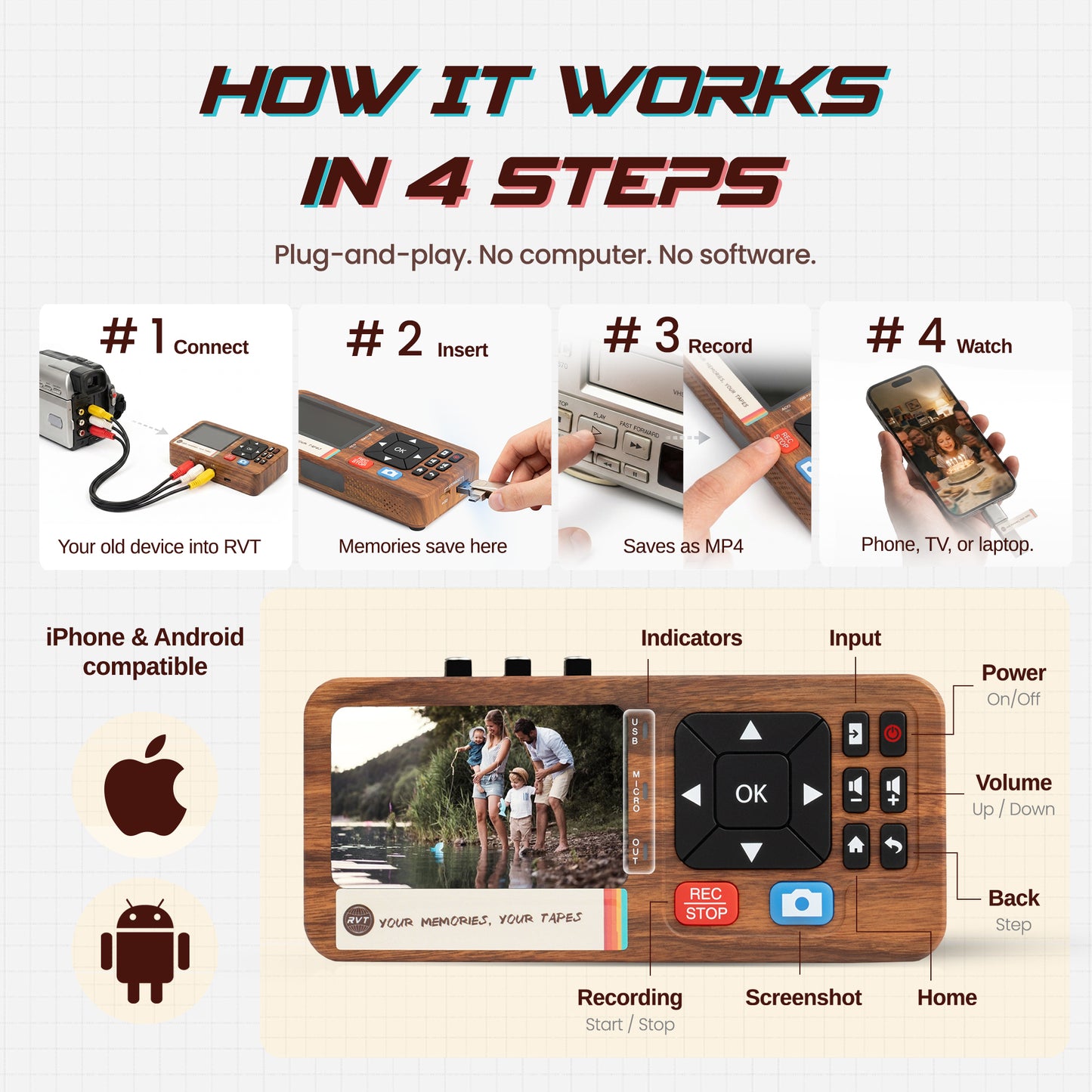
Here's the payoff. Once you have a healthy deck and a healthy reel, reel-to-reel is one of the easiest formats to capture, because nearly every consumer deck has proper RCA line outputs right on the back. Red and white cables straight into the RVT Digitizer 3.0's audio inputs, press play, press record, and a reel that's been silent for fifty years becomes a file the whole family can hear. Pro decks with 1/4-inch or XLR outputs just need a cheap adapter cable.
(The full story, as always: audio archivists capture to uncompressed WAV masters on a computer, and for rare or musically important reels that's the right call. The one-cable route is for families who want the voices saved this weekend.)
Name the files with who, when, and what. Keep copies in two places. Keep the reels, stored upright, cool, and dry. And play the best one for the family; that's what it was recorded for.
The complete walkthrough, with the deck buying table, speed and track format explainers, and the full checklist, is free in the Learn Center: Reel-to-Reel: The Complete Playback & Preservation Guide.
Your memories. Your tapes. Digitize everything. Regret nothing.